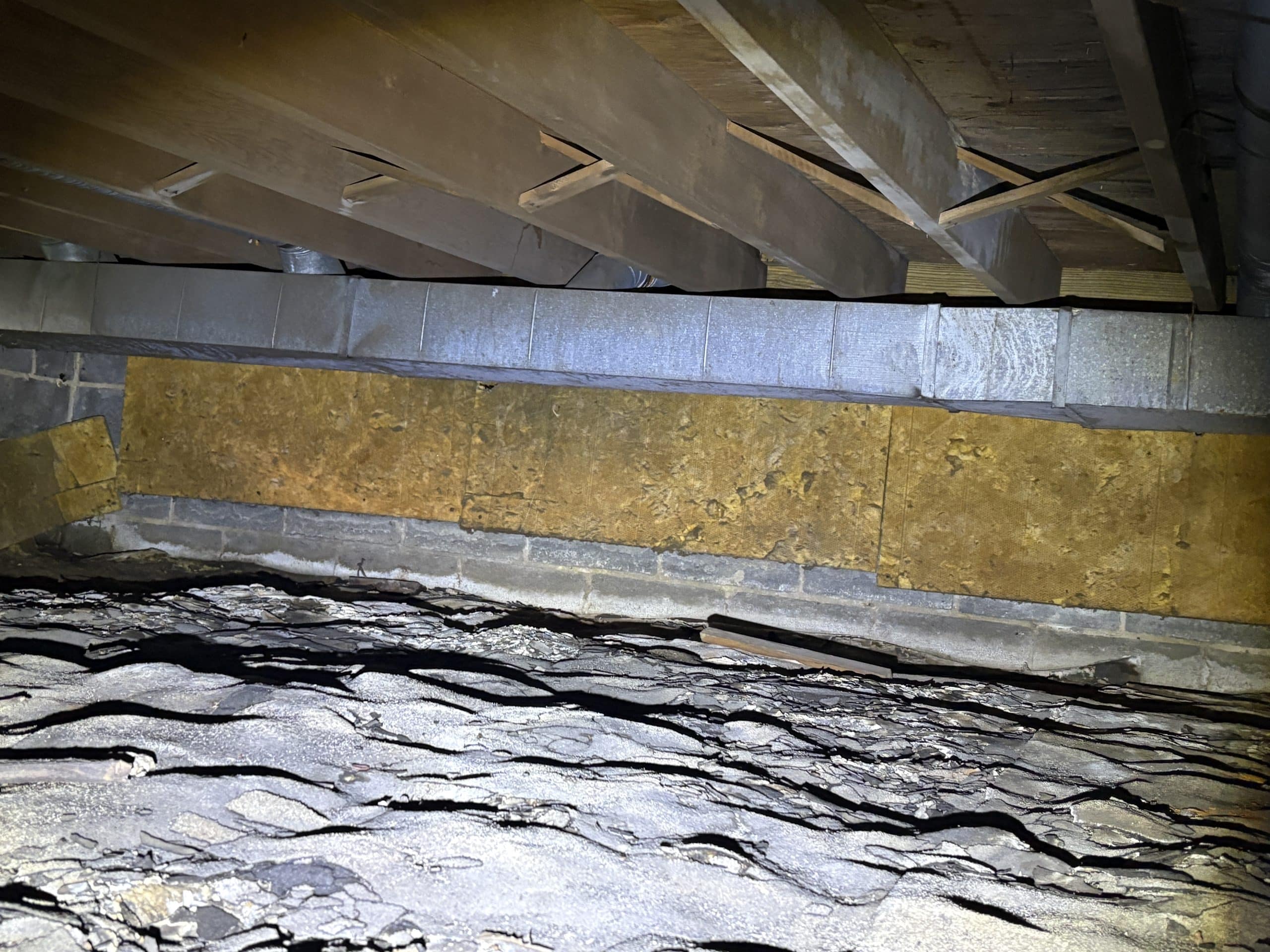
Uninsulated HVAC ductwork in a crawlspace—sealing and insulating ducts in unconditioned areas helps reduce energy loss and improve comfort.
Crawlspace duct insulation is essential when HVAC ductwork runs through an unconditioned crawlspace, because uninsulated ducts can waste energy and reduce comfort.
If your HVAC ductwork runs through a crawlspace and it’s uninsulated, you’re likely losing conditioned air before it ever reaches your living space. During a recent inspection in Delran, NJ, we observed exposed sheet-metal ductwork in the crawlspace with little to no insulation—an issue that can affect energy costs, comfort, and moisture control.
The good news: correcting this is often straightforward, and it can make a noticeable difference in how your home feels and what you spend to heat and cool it.
Uninsulated ducts in an unconditioned crawlspace can waste energy. Sealing duct leaks first and then insulating the ductwork can reduce heat loss/heat gain and improve comfort. The U.S. Department of Energy specifically recommends sealing and insulating ducts to reduce energy losses.
A crawlspace is typically outside the home’s conditioned envelope (meaning it isn’t heated or cooled the way your living area is). When supply air travels through uninsulated metal ducts in that space, it can quickly pick up or lose heat.
Common results include:
Higher heating and cooling bills (your system works harder to compensate)
Hot and cold rooms (temperature drop before air reaches registers)
Longer HVAC run times and added wear on equipment
Reduced overall comfort, especially in rooms farthest from the air handler
The Department of Energy notes that leaky or poorly insulated ducts can add significant cost and that sealing and insulating ducts in unconditioned spaces is often cost-effective.
In the photo, the ductwork appears to be bare metal running beneath the floor framing. When duct insulation is missing or damaged, the system can effectively “condition” the crawlspace instead of your home—especially during winter and summer extremes.
Suggested image alt text (Rank Math friendly):
Uninsulated metal HVAC ductwork in a crawlspace in Delran NJ causing energy loss
A big mistake homeowners (and even some contractors) make is insulating over leaks. If duct joints and seams aren’t sealed, you can still lose a lot of air—just with insulation wrapped around the problem.
ENERGY STAR recommends starting by sealing air leaks (using mastic sealant or approved metal tape) and then insulating accessible ducts in areas like crawlspaces.
Best practice is to seal:
Duct seams and joints
Connections at plenums and takeoffs
Any gaps around boots/registers where they meet flooring or drywall
ENERGY STAR also warns not to rely on “duct tape” because it doesn’t last.
Once sealed, add duct insulation that matches the installation environment. ENERGY STAR materials commonly reference R-6 or higher for ducts in unconditioned areas (attics, crawlspaces, garages).
Many energy codes also specify minimum duct insulation levels for ducts outside conditioned space. For example, federal guidance referencing the 2021 IECC describes criteria such as R-8 for larger ducts and R-6 for smaller ducts in unconditioned spaces.
(Note: exact code requirements can vary by jurisdiction and project type—always confirm with local code officials or your licensed contractor.)
In humid conditions, cool supply air can make uninsulated ducts cold enough for moisture in the air to condense on the duct surface. Over time, that can contribute to:
Rust/corrosion on metal ducts
Damp insulation (if partially insulated or poorly installed)
Elevated crawlspace moisture concerns
This is one reason we treat crawlspace duct insulation as both an efficiency upgrade and a moisture-management best practice.
A quality improvement typically includes:
Sealed joints using mastic or UL-rated foil tape
Continuous insulation wrap with the correct R-value for the application
Tight, well-fitted seams and protected corners/edges
Proper strapping/support so insulation doesn’t sag or tear
No compression of insulation (compressed insulation loses performance)
If the crawlspace has ongoing moisture problems, the bigger picture may include crawlspace improvements (vapor barrier integrity, drainage, dehumidification, or encapsulation) so the ductwork stays dry and performs well.
You might not see the crawlspace, but you can often feel the symptoms:
Some rooms are always too hot or too cold
Your HVAC seems to run constantly
Higher-than-expected utility bills
Weak airflow at certain registers
Musty odors (sometimes tied to crawlspace air and leakage pathways)
If you’re already improving ducts, it’s worth asking about:
Duct leakage testing (before and after)
Airflow verification after sealing/insulating
ENERGY STAR’s duct resources encourage evaluating airflow and safety considerations as part of duct improvements.
Consider a qualified HVAC contractor or home performance professional if:
Ductwork is damaged, disconnected, or poorly supported
You suspect significant duct leakage
There are combustion appliances and you want to confirm safe operation after changes
Crawlspace moisture is persistent
If the crawlspace is unconditioned, insulating ducts is generally recommended to reduce energy loss and improve comfort. DOE and ENERGY STAR both highlight sealing and insulating ducts in crawlspaces and similar spaces.
Yes. Seal first, then insulate. ENERGY STAR recommends sealing leaks with mastic or metal tape and then insulating accessible ducts.
Guidance varies, but R-6 is commonly referenced for ducts in unconditioned areas, and some energy-code criteria reference R-8 for larger ducts outside conditioned spaces.
They can contribute—especially when cold air moves through uninsulated ducts in humid environments, raising condensation risk on duct surfaces.
For more guidance on improving HVAC efficiency, see the U.S. Department of Energy’s tips on duct energy loss and ENERGY STAR’s recommendations for sealing and insulating ducts in crawlspaces.