
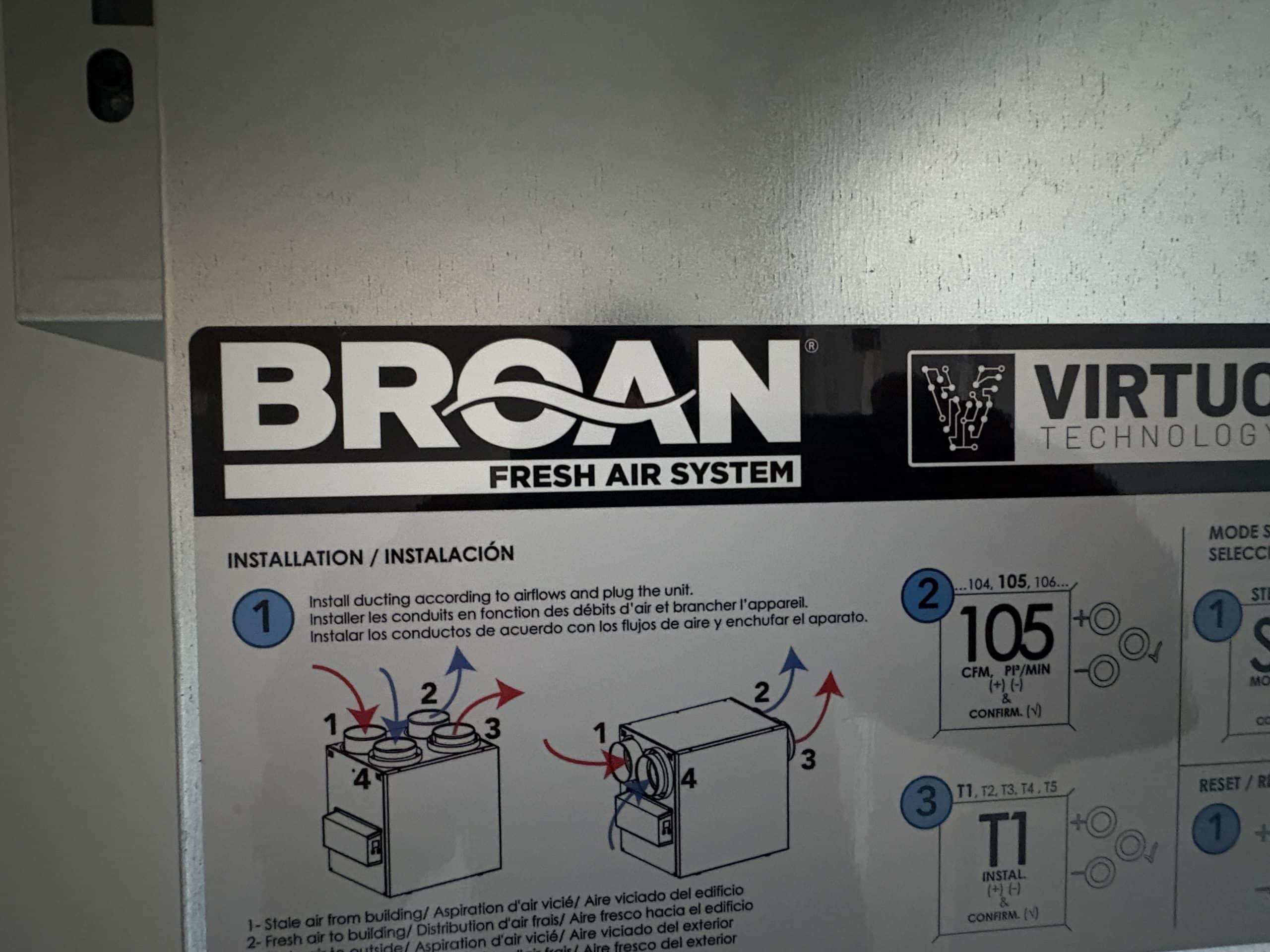
Whole-house mechanical ventilation system installed in a new construction home.
IRC whole-house mechanical ventilation is required in many new construction homes because today’s houses are built tighter than ever. With improved air sealing and insulation, natural air leakage isn’t enough to maintain healthy indoor air—so the IRC includes whole-house mechanical ventilation provisions to support indoor air quality and moisture control.
New homes are built tighter than ever. Better air sealing and insulation help reduce energy loss—but they also reduce the “natural” air exchange older homes relied on. That’s why many new construction homes are required to have whole-house mechanical ventilation under the International Residential Code (IRC).
Whether it’s a dedicated fresh air system, a timed exhaust fan strategy, or a balanced HRV/ERV setup, these systems are designed to continuously (or intermittently) bring in outdoor air and remove stale indoor air—helping manage moisture, odors, and indoor pollutants.
This article explains what the IRC requires, what these ventilation systems do, and what a new construction inspection should look for.
The IRC includes provisions that trigger whole-house mechanical ventilation when homes are tight enough that relying on open windows and “leakage” isn’t considered sufficient.
Older editions (and many state/city amendments based on them) reference mechanical ventilation requirements through the building planning section. For example, IRC language ties the need for whole-house ventilation to measured air infiltration thresholds and then points to the mechanical section for how the system must be provided.
Important note: Building codes are adopted locally. Your city/county/state may use a different IRC edition or have amendments—so requirements can vary by jurisdiction.
Whole-house mechanical ventilation is a system that intentionally moves air to help maintain indoor air quality. Depending on the design, it may:
Bring in outdoor air (supply ventilation)
Exhaust indoor air (exhaust ventilation)
Do both in a balanced way (often with an HRV/ERV, which can recover heat/energy)
IRC M1505.4 describes options for system types and how ventilation airflow is determined, along with controls and other provisions.
A whole-house ventilation system can be “present” and still not perform as intended if key details are missed. During a new construction inspection, we typically look at practical, field-observable items such as:
Ducts connected in the correct locations (supply vs. exhaust)
Reasonable workmanship (kinks, crushed flex duct, loose connections)
Terminations located properly and not blocked or contaminated
Basic control settings consistent with the installed system’s intended ventilation strategy
Access to components for future service and filter maintenance
Ducts that appear reversed or poorly sealed
Missing/bypassed controls
Ventilation intakes/exhausts placed where they can pull in unwanted contaminants
(Inspections are not code enforcement, but a good inspection helps you catch common installation issues before they become comfort, moisture, or air quality problems.)
If you’re buying or building a new home, don’t assume the ventilation system is automatically “good to go” because it’s installed. These systems are often required under the IRC in new construction, and getting them right matters for both comfort and indoor air quality.
A third-party new construction inspection can help verify the system looks correctly installed and ready to operate—before final walkthrough and closing day.
ICC Digital Codes: IRC 2021 Section M1505.4 (Whole-house mechanical ventilation)
ICC Digital Codes: IRC 2015 Section R303.4 (Mechanical ventilation trigger language)
NAHB Tech Note: Whole-house mechanical ventilation overview and code context
U.S. DOE article on ASHRAE 62.2 and “build tight, ventilate right”