
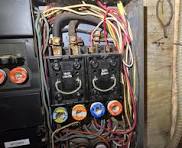
Old fuse box subpanel with screw-in fuses (outdated electrical panel)
Old fuse box replacement is recommended when a home still uses an outdated fuse-type subpanel, because these systems can be easier to misuse, harder to service, and not ideal for today’s electrical loads.
If your home has an older fuse box subpanel—like the one shown in the photo below—it’s a sign your electrical system may be behind today’s safety standards and modern power needs. Fuse boxes were common in older homes, but most were not designed for the loads we place on electrical systems now (HVAC equipment, kitchen appliances, home offices, smart devices, and EV charging).
A fuse panel isn’t automatically “bad,” but it is often outdated, harder to maintain, and easier to misuse compared to a modern circuit breaker panel. That’s why many homeowners choose to replace fuse boxes for improved safety, reliability, and future capacity.
This image is an older-style fuse box subpanel. You can see a pull-out fuse/disconnect block at the top and multiple screw-in (Edison-base) plug fuses below. This style was widely used decades ago, but it lacks many of the protections and convenience found in modern breaker panels.
Old fuse box subpanel with pull-out disconnect and screw-in plug fuses
Close-up photo of an open electrical subpanel showing an older fuse box design, including a pull-out fuse carrier at the top and several round screw-in plug fuses installed below.
One of the biggest concerns with fuse panels is that fuses can be installed in the wrong amperage. If an oversized fuse is used, the circuit may not shut off when it should—this can contribute to overheated wiring and increased fire risk.
Most fuse panels are well beyond their intended service life. Over time, electrical connections can loosen and metal parts can corrode. These conditions can lead to hot spots, arcing, and unreliable operation.
Older fuse subpanels often have limited spaces and lower overall capacity, which makes it harder to safely add circuits for renovations, finished basements, new appliances, or upgrades like EV charging.
Modern breaker panels can be equipped with safety technologies like GFCI and AFCI protection (where required/appropriate), and they’re typically easier to integrate with whole-home surge protection.
Fuse boxes can be harder to service due to limited parts availability. They may also be flagged during home inspections, real estate transactions, or insurance reviews, depending on the carrier and the overall electrical setup.
Upgrading to a modern circuit breaker panel can provide:
Improved safety and more reliable shutoff
More room for additional circuits
Better compatibility with modern protection devices
Cleaner labeling and easier troubleshooting
Better support for future upgrades
If you find a fuse panel in your home:
Don’t swap fuses randomly—wrong sizing can be dangerous.
Have a licensed electrician evaluate the panel, wiring condition, and capacity needs.
Ask about an upgrade plan that matches your home’s present load and future goals (renovation, additions, EV charger, etc.).
Note: This article is for general education and isn’t a substitute for an on-site evaluation by a licensed electrician.
Is a fuse box illegal?
Not necessarily. Many older fuse panels are “grandfathered,” but that doesn’t mean they’re ideal or safe for modern use.
How do I know if my fuse box needs replacement?
Common signs include frequent blown fuses, warm cover plates, flickering lights, limited capacity, or evidence of corrosion/heat damage.
Is a breaker panel safer than fuses?
In most cases, yes—breaker panels reduce the risk of incorrect “oversizing” and support modern protective devices more easily.
CPSC: Plug Into Electrical Safety (warns about oversized fuses / fire hazard)
https://www.cpsc.gov/Newsroom/News-Releases/2000/CPSC-and-NESF-Urge-Consumers-to-Plug-Into-Electrical-Safety
CPSC: Guide to Home Wiring Hazards (PDF)
https://www.cpsc.gov/s3fs-public/518.pdf
ESFI: Understanding Your Home Electrical System (fuses vs breakers basics)
https://www.esfi.org/understanding-your-home-electrical-system/
Eaton: AFCI and GFCI requirements (modern protection overview)
https://www.eaton.com/us/en-us/products/residential/afci-and-gfci-requirements.html