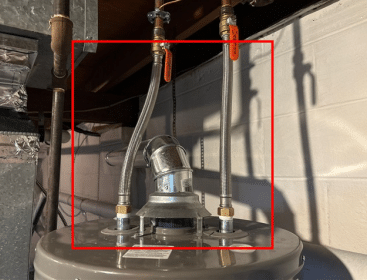
Improper flexible connections installed within the required clearance of a natural draft water heater flue.
Water heater clearance to combustibles is a common safety defect found during home inspections and can create serious fire hazards if not corrected. Natural draft water heaters rely on proper clearances and approved materials to operate safely. During home inspections, one common defect we encounter is flexible connections installed too close to the flue pipe at the top of the water heater.
The photo above shows a natural draft gas water heater with flexible connectors installed at the top of the tank, directly adjacent to a single-wall flue pipe. This configuration is not permitted due to clearance-to-combustible requirements and fire safety concerns.
Water heater clearance to combustibles is required to reduce fire risk and ensure safe operation of natural draft water heaters.
This water heater uses a single-wall metal flue pipe, which is common on natural draft appliances. Under widely adopted building and fire codes:
Single-wall flue pipe requires a minimum clearance of 6 inches to combustible materials
Flexible connectors (gas or water) typically have rubber, polymer, or synthetic components
These materials are considered combustible or heat-sensitive
When flexible connectors are installed within the required clearance zone, they are exposed to excessive heat, increasing the risk of:
Material degradation
Melting or cracking
Gas leaks or water leaks
Fire hazards
New Jersey adopts the International Residential Code (IRC) and International Fuel Gas Code (IFGC) through the NJ Uniform Construction Code (NJAC 5:23). These codes govern appliance installation, venting, and clearance requirements.
👉 NJ UCC Reference:
https://www.nj.gov/dca/codes/codreg/ucc.shtml
Under the International Residential Code (IRC) and International Fuel Gas Code (IFGC):
Single-wall vent connectors must maintain 6 inches of clearance to combustible materials
Vent connectors must be installed so that nearby components are not exposed to excessive heat
Flexible connectors located within this clearance zone do not meet the intent of the code, even if they are commonly seen in older installations.
The National Fuel Gas Code (NFPA 54) also addresses:
Approved materials for gas connections
Proper routing and protection of flexible connectors
Separation from heat-producing venting systems
👉 NFPA 54 Overview:
https://www.nfpa.org/codes-and-standards/all-codes-and-standards/list-of-codes-and-standards/detail?code=54
Improper water heater installations like this are important because they:
Create fire and burn hazards
Can lead to premature failure of gas or water connectors
May not meet current NJ code requirements
Often indicate work performed without proper permits or inspections
During a home inspection, this condition is typically flagged for correction by a qualified, licensed plumbing or HVAC contractor.
Common corrective actions may include:
Replacing flexible connectors with approved rigid piping near the flue
Reconfiguring connections to maintain required clearances
Upgrading venting components if necessary
Verifying work complies with NJ UCC and manufacturer installation instructions
Final repairs should be performed by an NJ licensed plumbing or mechanical contractor, and permits may be required depending on the scope of work.
This condition is easy to overlook, especially because the water heater may appear to be operating normally. A professional home inspection focuses not only on whether systems function—but whether they are installed safely and correctly.
Identifying these issues before closing allows buyers to:
Address safety concerns
Request repairs or credits
Avoid costly surprises after move-in
Improper water heater installations are a common defect found during South Jersey home inspections. Knowing what to look for—and why it matters—can make a significant difference in protecting your home and family.